
Insights · Team ownership series, part 2 of 5
The Puppy Syndrome: What Happens When Work Is Handed Down
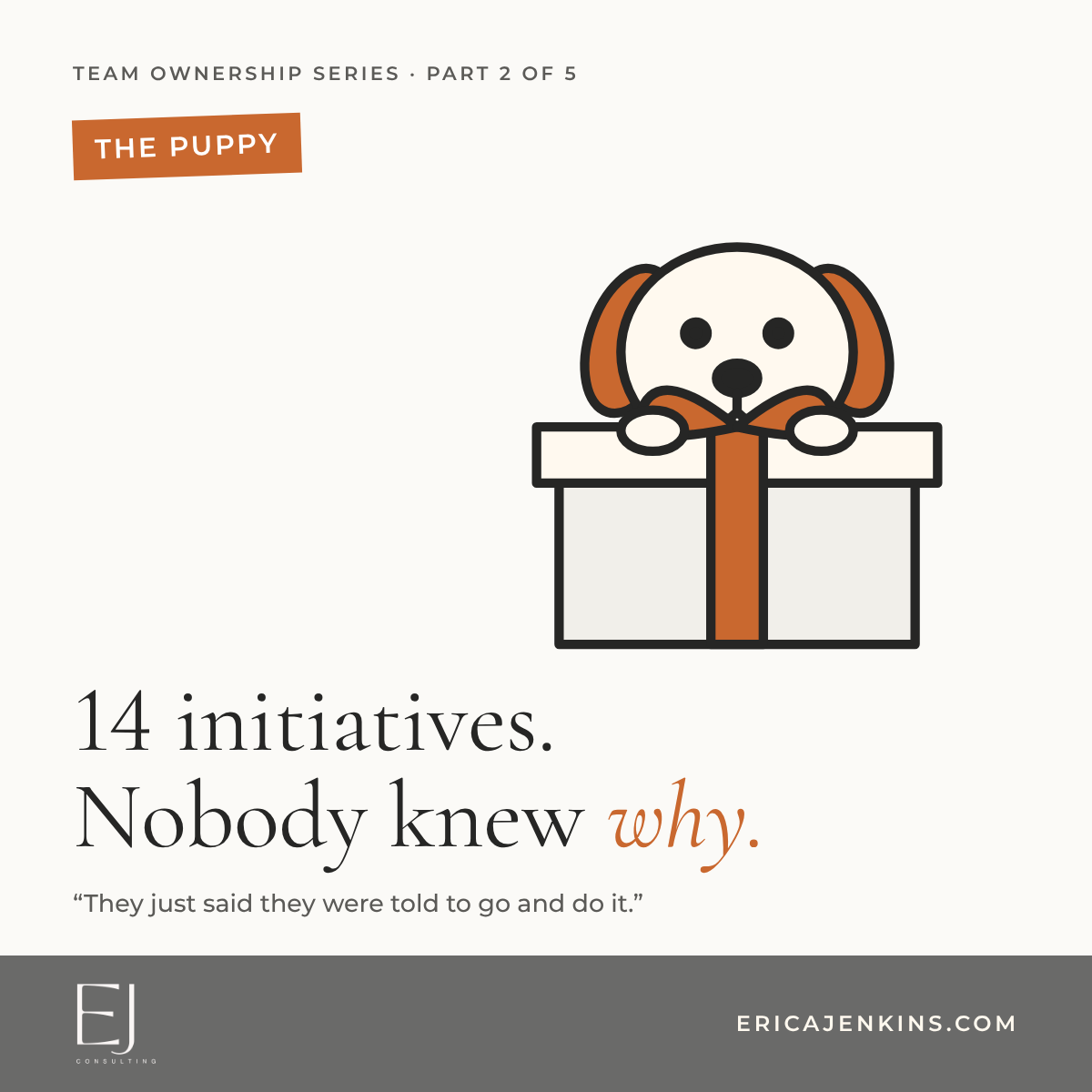
What happens when work is handed down?
When work gets handed down with no input, people comply and stop right there. They do exactly what you asked. The puppy gets fed. It doesn’t thrive.
I call it the puppy syndrome. You hand someone a puppy they never asked for. Maybe they wanted a kitten and you gave them a puppy. They’ll feed it and keep it alive, because you told them to.
You’re probably running a Puppy team if:
- You hear about problems after they happen, from people who saw them coming.
- Work stops at the edge of the instructions.
- Updates arrive only when you ask for them.
- You spend your week checking on things when you should be doing your own job.
Here’s the part leaders don’t love hearing. This is rarely a people problem. You don’t have the wrong team. You have a team nobody asked. And the cost lands on you, because every decision and every ounce of energy has to come from the top. That’s exhausting.
What does the puppy syndrome look like in a real company?
I ran into this recently. A client had their marketing and product marketing teams running through Asana, so on paper everything was organized. Or so it seemed...
There were 14 different initiatives happening in one quarter. Fourteen! And there was no top-level strategy for what any of it was supposed to achieve. Was the goal more leads that quarter? Messaging for a major product release? Moving customers from month-to-month onto annual contracts? No north star to guide the team.
All of it had been handed out by leadership. So I started interviewing the team. What’s the purpose? What’s the goal? What are we trying to achieve? Nobody could give me an answer. They just said they were told to go and do it.
There was even an outside contractor who’d been handed work to go and optimize old blogs. Again, for what purpose? We were spending thousands of dollars on manual updates that AI could have done in the company’s own tone and voice, and brought back results.
Lots of puppies being handed out. Nobody understood what each puppy’s purpose was and all of it was disconnected. The team was busy just being busy.
How do you fix the puppy syndrome?
You stop, and you bring the team the problem before you bring them the plan. People take ownership of work they helped shape.
So I worked with the leader of the team, and we stopped all initiatives. Then we sat down together, with the marketer and the product marketer in the room, for a quick two-hour workshop to really understand which business levers we wanted to push on.
We left with two objectives where there had been 14 initiatives. The first was to bring more of the people who make the buying decision to the website, which meant repositioning it. The second was connecting with current customers to generate customer stories for the website, spotlighting customers at our quarterly webinars, and driving review site traffic so prospects could see the benefits for themselves.
Those clear deliverables became content plans with clear objectives, and we brought all of it to life in less than 30 days. Once everybody knew the direction they were headed, they went heads down, brought back drafts, and came with their own thoughts and proposals. We moved things forward with focus.
Are you handing out puppies?
The Puppy Syndrome Team Check takes about ten minutes and tells you where your team runs on ownership and where it runs on instructions.
Next in the series: herding cats, and what months of meetings with no owner cost one company.
Frequently asked questions
What is the puppy syndrome?
The puppy syndrome is what happens when a leader hands someone a project they had no part in choosing. The person does what they were told and nothing more, the way you would feed a puppy you never asked for.
Why don’t my employees take ownership?
People take ownership of work they helped shape. If the plan arrived finished, there is nothing left for them to own. Bring the team the problem before you bring them the plan.
How many initiatives are too many for one team?
If nobody on the team can tell you what an initiative is for, it’s one too many. I hold teams to two or three objectives at a time, and every initiative has to serve one of them.